
Bald-Faced Hornets in Pennsylvania: Identification, Nests & Safe Removal
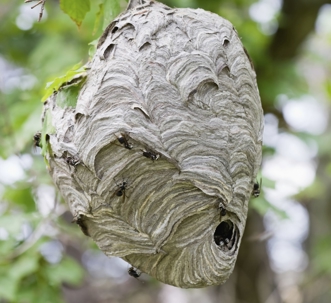
If you've ever spotted a large gray, football-shaped nest hanging from a tree or the corner of your home, there's a good chance you've encountered a bald-faced hornet. These striking black-and-white insects are among the most intimidating stinging insects found in Pennsylvania, and they're well known for aggressively defending their nests.
At Budget Exterminating, we remove bald-faced hornet nests every summer throughout Downingtown, West Chester, Coatesville, Malvern, Exton, Chester Springs, and across Chester County. While they play an important role in the ecosystem by helping control other insect populations, they can become a serious safety concern when they build nests near homes, patios, decks, schools, or businesses.
In this guide, we'll explain how to identify bald-faced hornets, where they build their nests, why they're so aggressive, and what to do if you find one on your property.
What Are Bald-Faced Hornets?
Despite their name, bald-faced hornets are not true hornets. They are actually one of the largest species of yellow jackets found in North America.
Like yellow jackets, they live in large social colonies led by a single queen. Throughout the spring and summer, worker hornets expand the nest, care for developing larvae, and forage for food. By late summer, a healthy colony can contain several hundred workers, all dedicated to protecting the queen and the nest.
How to Identify a Bald-Faced Hornet
Bald-faced hornets are easy to recognize once you know what to look for.
Physical Characteristics
- Black body with distinct white markings on the face
- White bands near the end of the abdomen
- Approximately ½ to ¾ inch long
- Smooth, shiny body with a narrow waist
- Loud, fast flight
Unlike European hornets, which are brown and yellow, bald-faced hornets have a bold black-and-white appearance that makes them stand out.
What Does a Bald-Faced Hornet Nest Look Like?
One of the easiest ways to identify bald-faced hornets is by their nest.
These nests are made from wood fibers that the hornets chew and mix with saliva, creating a gray, paper-like material.
Most nests are:
- Football-shaped
- Gray in color
- Fully enclosed
- Built with a single entrance near the bottom
- Suspended above the ground
By late summer, a mature nest can grow larger than a basketball and house hundreds of hornets.
Where Do Bald-Faced Hornets Build Their Nests?
Unlike yellow jackets, which often nest underground, bald-faced hornets prefer elevated locations.
Common nesting sites include:
- Trees
- Shrubs
- Roof overhangs
- Decks
- Sheds
- Utility poles
- Playsets
- Building corners
These exposed nests make them easier to spot, but they can also pose a risk when located near areas where people spend time outdoors.
Are Bald-Faced Hornets Aggressive?
Yes—but mostly when defending their nest.
Hornets foraging away from the colony are generally focused on finding food and are less likely to sting unless handled or threatened.
However, approaching or disturbing a nest is a different story.
Worker hornets quickly respond to vibrations, loud noises, or perceived threats. When one hornet senses danger, it releases alarm pheromones that alert the rest of the colony. Within seconds, multiple hornets may emerge to defend the nest.
This is why homeowners should never attempt to knock down or spray a large nest without understanding the risks.
What Do Bald-Faced Hornets Eat?
Bald-faced hornets are beneficial predators.
They feed on:
- Flies
- Caterpillars
- Spiders
- Other wasps
- Soft-bodied insects
Adults also consume nectar, tree sap, and sugary substances, especially later in the season.
While they help reduce other insect populations, their aggressive behavior near homes often outweighs these benefits.
What Should You Do If You Find a Nest?
If you discover a bald-faced hornet nest:
- Stay a safe distance away.
- Keep children and pets away from the area.
- Avoid throwing objects at the nest.
- Do not attempt to burn or flood the nest.
- Contact a professional if the nest is located near your home or areas of frequent activity.
Many DIY removal attempts result in multiple painful stings and incomplete elimination of the colony.
Can You Remove a Bald-Faced Hornet Nest Yourself?
Small, newly established nests in low-risk locations may sometimes be removed safely by experienced individuals using proper protective equipment.
However, large nests near homes, decks, or walkways should generally be left to professionals.
Professional treatment reduces the likelihood of provoking the colony and helps ensure the nest is fully eliminated.
Bald-Faced Hornets vs. Other Stinging Insects
Bald-faced hornets are often confused with other common species.
Yellow Jackets
Yellow jackets typically build underground or inside wall voids and are bright yellow and black. Bald-faced hornets build exposed aerial nests and are black and white.
European Hornets
European hornets are larger, brown and yellow, and often nest inside hollow trees or wall voids. They are also active after dark.
Paper Wasps
Paper wasps build small umbrella-shaped nests with exposed cells. They are generally less aggressive than bald-faced hornets.
For a complete comparison of Pennsylvania's most common stinging insects, read our Complete Homeowner's Guide to Stinging Insects in Chester County.
Frequently Asked Questions
Are bald-faced hornets really hornets?
No. They are actually one of the largest species of yellow jackets.
Do bald-faced hornets sting more than once?
Yes. Like other wasps, they can sting multiple times because they do not lose their stinger.
When are bald-faced hornets most active?
Activity typically peaks during late summer when colonies reach their maximum size.
Do bald-faced hornets return to the same nest every year?
No. Colonies die off after the first hard frost. New queens build new nests each spring, although they may choose similar locations.
Are bald-faced hornets beneficial?
Yes. They help control many pest insects, but nests near homes can become dangerous due to their defensive nature.
Professional Bald-Faced Hornet Removal in Chester County
If you've found a bald-faced hornet nest on your property, don't take chances.
Budget Exterminating provides professional bald-faced hornet removal throughout Downingtown, West Chester, Coatesville, Malvern, Exton, Chester Springs, and the surrounding Chester County communities.
Our technicians can identify the species, evaluate the location of the nest, and recommend the safest and most effective treatment.
If you have questions about a nest or need professional removal, contact Budget Exterminating today. We'll help you reclaim your outdoor space safely and efficiently.