
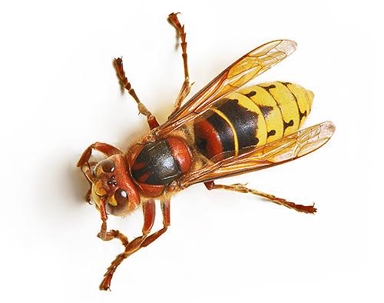
European Hornets in Pennsylvania: Identification, Nests & Safe Removal
If you've ever seen a large hornet flying around your porch light after dark, you may have encountered a European hornet. As the largest stinging insect commonly found in Pennsylvania, European hornets often alarm homeowners because of their size. Fortunately, they are frequently misunderstood.
At Budget Exterminating, we help homeowners throughout Downingtown, West Chester, Coatesville, Malvern, Exton, Chester Springs, and across Chester County identify and safely remove European hornet nests. While they aren't as aggressive as yellow jackets or bald-faced hornets when away from their nest, they can still become dangerous if their colony is disturbed or established inside a home.
This guide explains how to identify European hornets, where they nest, why they fly at night, and what to do if you discover a colony on your property.
What Are European Hornets?
European hornets (Vespa crabro) were introduced to North America in the 1800s and have become well established throughout Pennsylvania. They are the only true hornet commonly found in our region.
Despite their intimidating appearance, European hornets spend much of their time hunting insects, feeding on tree sap, and collecting food for their colony. They are generally less confrontational than yellow jackets unless someone gets too close to the nest.
How to Identify a European Hornet
European hornets are much larger than yellow jackets and paper wasps.
Physical Characteristics
- 1 to 1½ inches long
- Brownish-red head and thorax
- Yellow abdomen with black markings
- Thick, robust body
- Amber-colored wings
- Loud, noticeable flight
Because of their size, many homeowners mistakenly believe they've found the invasive "murder hornet." European hornets are entirely different and have been present in Pennsylvania for many years.
Where Do European Hornets Build Their Nests?
Unlike bald-faced hornets, European hornets usually prefer enclosed, protected spaces.
Common nesting sites include:
- Hollow trees
- Wall voids
- Attics
- Barns
- Sheds
- Chimneys
- Crawl spaces
When a colony establishes itself inside a wall, homeowners may hear scratching or buzzing sounds, especially during warm evenings.
Why Are European Hornets Active at Night?
One of the most unique characteristics of European hornets is their nighttime activity.
Unlike most wasps, they continue flying after sunset and are strongly attracted to lights.
Homeowners often notice them:
- Flying around porch lights
- Gathering near garage lights
- Bumping into windows
- Entering open garages after dark
This behavior is completely normal and one of the easiest ways to distinguish them from other stinging insects.
Are European Hornets Aggressive?
European hornets are generally less aggressive than yellow jackets when they're away from their nest.
However, if their colony is threatened, they will defend it and can sting multiple times.
They may become defensive when:
- A nest is disturbed
- Vibrations occur near the colony
- Someone attempts DIY removal
- Trees or structures containing a nest are disturbed
As with any stinging insect, it's best to avoid approaching an active nest.
What Do European Hornets Eat?
European hornets are beneficial predators that help reduce populations of nuisance insects.
They commonly feed on:
- Flies
- Caterpillars
- Grasshoppers
- Crickets
- Other wasps
- Tree sap
- Ripe fruit
While they can be helpful in nature, colonies located near homes often create unnecessary risks for families and pets.
Signs You May Have a European Hornet Nest
Watch for:
- Large hornets flying after dark
- Frequent activity around porch lights
- Hornets entering the same opening in siding or soffits
- Buzzing sounds inside walls
- Consistent activity around hollow trees
If you notice repeated traffic to one location, there's a good chance a nest is nearby.
Can You Remove a European Hornet Nest Yourself?
DIY removal is not recommended, especially if the nest is hidden inside a wall, attic, or tree cavity.
Treating only the visible hornets rarely eliminates the colony. In some cases, improper treatment can cause surviving hornets to move deeper into wall voids or become more defensive.
Professional identification and treatment help ensure the colony is addressed safely and effectively.
European Hornets vs. Other Stinging Insects
Yellow Jackets
Yellow jackets are smaller, bright yellow and black, and frequently build underground nests. They are generally more aggressive than European hornets.
Bald-Faced Hornets
Bald-faced hornets are black and white and build large gray paper nests hanging from trees and structures.
Paper Wasps
Paper wasps are slender, build open umbrella-shaped nests, and are typically less defensive than European hornets.
To learn more about all of Pennsylvania's common stinging insects, visit our Complete Homeowner's Guide to Stinging Insects in Chester County.
Frequently Asked Questions
Are European hornets dangerous?
They can be if their nest is disturbed. Like other wasps, they can sting multiple times and will defend their colony.
Are European hornets the same as murder hornets?
No. European hornets are a completely different species and have been established in Pennsylvania for generations.
Why do European hornets fly at night?
Unlike most wasps, they remain active after sunset and are attracted to artificial lights.
Do European hornets return to the same nest every year?
No. Colonies typically die after the first hard frost. New queens build new nests each spring, although they may choose similar locations.
Should I worry if I see one hornet?
Not necessarily. A single hornet may simply be foraging. However, repeated activity in one area could indicate a nearby nest.
Professional European Hornet Removal in Chester County
If you've noticed large hornets around your home or suspect a nest inside a wall, attic, or tree, Budget Exterminating can help.
We provide professional European hornet removal throughout Downingtown, West Chester, Coatesville, Malvern, Exton, Chester Springs, and surrounding Chester County communities.
Our experienced technicians will identify the species, locate the nest, and recommend the safest treatment so you can enjoy your property with confidence.
If you have questions or need professional stinging insect control, contact Budget Exterminating today.