
Yellow Jackets in Pennsylvania: Everything Homeowners Need to Know
If you've noticed dozens of yellow and black insects flying low over your lawn or swarming around your trash cans, there's a good chance you're dealing with yellow jackets. Every summer, Budget Exterminating receives calls from homeowners throughout Downingtown, West Chester, Coatesville, Malvern, Exton, Chester Springs, and across Chester County for yellow jacket nests hidden underground, inside walls, and around their homes.
Although many people call them "bees," yellow jackets are actually a type of social wasp. Unlike honey bees, they can sting multiple times, aggressively defend their nests, and quickly turn a simple yard chore into a painful experience.
In this guide, we'll explain how to identify yellow jackets, where they build their nests, why they become so aggressive in late summer, and what you should do if you discover a nest on your property.
What Are Yellow Jackets?
Yellow jackets are one of the most common—and most aggressive—stinging insects found in Pennsylvania. They live in large colonies that can grow into the thousands by late summer.
Unlike honey bees, which primarily feed on nectar and pollen, yellow jackets are scavengers. They'll search for protein and sugary foods, which is why they're commonly found around:
- Outdoor barbecues
- Garbage cans
- Pet food
- Fallen fruit
- Soda and sugary drinks
- Picnic areas
Their ability to sting multiple times and aggressively defend their colony makes them one of the most dangerous stinging insects homeowners encounter.
How to Identify a Yellow Jacket
Yellow jackets are often mistaken for bees, but there are a few easy ways to tell them apart.
Yellow Jacket Characteristics
- Bright yellow and black bands
- Smooth, shiny body with very little hair
- Approximately ½ inch long
- Fast, direct flight
- Narrow waist
Honey bees are fuzzier, slightly larger, and generally only sting when they feel trapped or threatened. Yellow jackets, on the other hand, are much more defensive and can sting repeatedly.
Where Do Yellow Jackets Build Their Nests?
One of the reasons yellow jackets are so difficult to control is that their nests are often hidden.
Common nesting locations include:
- Abandoned rodent burrows
- Underground cavities
- Landscape beds
- Retaining walls
- Beneath decks
- Wall voids
- Crawl spaces
- Foundation voids
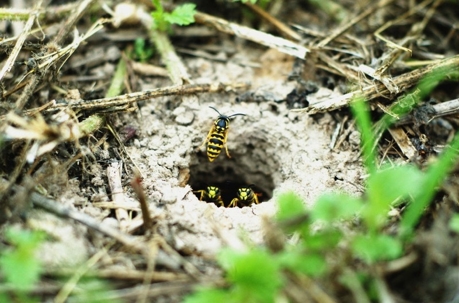
An underground nest may only have a small entrance hole, making it easy to overlook until you accidentally disturb it while mowing, gardening, or walking through the yard.
Why Are Yellow Jackets So Aggressive?
Many homeowners ask why yellow jackets seem much more aggressive in August and September.
The answer lies in their life cycle.
By late summer:
- Colonies are at their largest.
- Thousands of workers are protecting the queen.
- Natural food sources begin to decline.
- Workers actively search for sugary foods and proteins.
- The colony becomes highly defensive.
When a nest is disturbed, yellow jackets release an alarm pheromone that signals nearby workers to attack. This is why one sting can quickly turn into many.
Signs You May Have a Yellow Jacket Nest
You may have a yellow jacket nest if you notice:
- A steady stream of insects entering and leaving the same hole in the ground.
- Increased activity around landscaping or retaining walls.
- Yellow jackets flying in and out of siding or soffits.
- Numerous insects around garbage cans or outdoor eating areas.
- Activity near decks, sheds, or foundations.
If you observe consistent traffic to a single location, avoid getting closer to investigate.
Are Yellow Jackets Dangerous?
For most people, a single sting is painful but temporary. However, yellow jackets become especially dangerous when:
- Multiple people are stung.
- A nest is disturbed.
- Someone has a sting allergy.
- Young children or pets are nearby.
Because yellow jackets can sting repeatedly, disturbing a large colony can result in dozens of stings in a matter of seconds.
Should You Remove a Yellow Jacket Nest Yourself?
We strongly recommend caution.
Store-bought wasp sprays may kill visible workers, but they often fail to eliminate the entire colony—especially when the nest is underground or inside a wall void.
DIY removal can also increase the risk of provoking the colony.
Professional treatment allows the nest to be identified, treated appropriately, and monitored if necessary to ensure the colony has been eliminated.
How We Remove Yellow Jacket Nests
At Budget Exterminating, every yellow jacket service begins with identifying the species and locating the nest.
Depending on the nest location, treatment may involve professional insecticides or specialized dust formulations designed to reach the colony effectively. Once treated, activity typically declines significantly over the following days.
Every situation is different, which is why proper identification and treatment are so important.
How to Prevent Yellow Jackets Around Your Home
While it's impossible to prevent every yellow jacket from entering your property, these tips can reduce the chances of attracting them:
- Keep garbage cans tightly closed.
- Clean outdoor grills after use.
- Remove fallen fruit from the yard.
- Seal openings around siding and utility penetrations.
- Inspect decks, sheds, and retaining walls regularly.
- Address small nests early before colonies expand.
Routine inspections can also help identify developing nests before they become a major issue.
Yellow Jackets vs. Other Stinging Insects
Yellow jackets are just one of several stinging insects commonly found around Chester County homes.
Unlike:
- Paper Wasps, which build small umbrella-shaped nests under eaves,
- Bald-Faced Hornets, which build large hanging paper nests in trees,
- European Hornets, which often nest in wall voids and are active at night,
yellow jackets frequently establish hidden underground colonies, making them more difficult to detect and often more hazardous to homeowners.
To learn more about these species, read our Complete Homeowner's Guide to Stinging Insects in Chester County.
Frequently Asked Questions
Do yellow jackets die after they sting?
No. Unlike honey bees, yellow jackets can sting multiple times because they do not lose their stinger.
What month are yellow jackets the worst?
In Pennsylvania, activity typically peaks during August and September, when colonies reach their largest size.
Will yellow jackets return to the same nest next year?
No. Colonies usually die after the first hard frost. However, new queens often build nests in the same favorable areas year after year.
Can yellow jackets nest inside walls?
Yes. Yellow jackets frequently build nests inside wall voids, soffits, crawl spaces, and other protected areas of homes.
Are yellow jackets beneficial?
Yes. They help control other insects by feeding them to their larvae. However, when they establish nests near homes, walkways, patios, or play areas, they pose a significant safety risk.
Professional Yellow Jacket Removal in Chester County
If you've discovered a yellow jacket nest on your property, don't take unnecessary risks.
Budget Exterminating provides professional yellow jacket removal throughout Downingtown, West Chester, Coatesville, Malvern, Exton, Chester Springs, and surrounding Chester County communities.
We'll identify the species, locate the nest, and recommend the safest, most effective treatment to help protect your home and family.
If you're seeing increased yellow jacket activity around your property, contact Budget Exterminating today to schedule an inspection.