
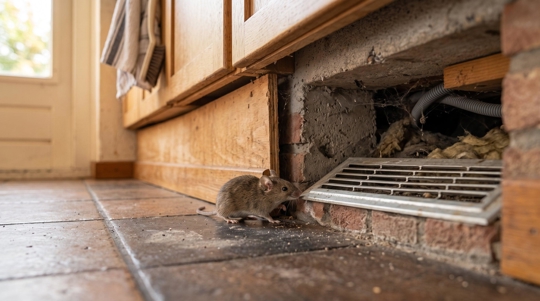
7 Signs You Have Mice in Your House: A Chester County Homeowner's Guide
Have you been hearing scratching in your walls at night? Maybe you've discovered small droppings in the basement or noticed something moving across your garage floor.
You might have mice living inside your home without even realizing it.
At Budget Exterminating Inc., we provide professional rodent control throughout Chester County, Pennsylvania. One thing we've learned from inspecting homes over the years is that homeowners often discover evidence of mice long before they actually see one.
Mice are naturally cautious and tend to remain hidden, particularly during the daytime. They frequently travel through wall voids, basements, attics, garages, and other areas where they're less likely to encounter people.
Knowing what to look for can help you recognize a developing rodent problem before it becomes more extensive.
Here are seven common signs that mice may be living inside your home.
1. Mouse Droppings in Cabinets, Basements, or Garages
One of the most recognizable signs of mouse activity is the presence of droppings.
House mouse droppings are typically small, dark, and shaped somewhat like grains of rice, often with pointed ends. They generally measure approximately 1/8 to 1/4 inch long.
Homeowners frequently discover droppings in areas such as:
Kitchen cabinets and pantries
Under sinks and behind appliances
Basement storage areas
Garages and utility rooms
Attics and insulation
Along walls and behind stored belongings
Droppings can help identify areas where rodents have been traveling or feeding.
However, their appearance alone doesn't always establish whether the activity is recent. Older droppings may remain in place long after rodents have moved elsewhere.
Important: Never sweep or vacuum dry rodent droppings. Follow CDC guidance for safely wetting and disinfecting contaminated areas before cleanup.
2. Scratching or Movement Inside Walls and Ceilings
Have you ever been lying in bed at night and heard scratching, scurrying, or movement inside your walls?
This is one of the most common reasons homeowners contact us about potential rodent activity.
Mice can travel through wall cavities, floor systems, and attic spaces, often using concealed areas to move throughout a structure.
Because mice are generally more active at night, homeowners may notice these sounds when the house is quiet.
However, scratching in a wall doesn't automatically mean you have mice.
Squirrels, other rodents, and occasionally other wildlife can produce similar sounds.
Identifying the source of the activity is important before choosing a treatment strategy.
3. Gnaw Marks on Food Packaging or Building Materials
Mice have continuously growing incisors and regularly gnaw on materials.
Inside homes, they may damage food packaging, cardboard boxes, stored belongings, and certain building materials.
Homeowners might discover:
Small holes in bags of pet food or bird seed
Chewed cardboard boxes
Damaged food containers
Gnaw marks around concealed openings
Damage to insulation or other accessible materials
Rodent gnawing can also damage electrical wiring, potentially creating a fire hazard.
If you discover damaged wiring, have a qualified electrician evaluate it.
4. Nesting Material in Hidden Areas
Mice frequently build nests in protected spaces near food sources and areas with limited disturbance.
They may collect soft materials such as shredded paper, insulation, fabric, and other readily available items.
Common nesting locations include garages, attics, wall voids, storage spaces, and areas behind appliances.
A collection of shredded material doesn't automatically confirm an active mouse nest, but it can be an important clue when combined with droppings, gnaw marks, or other evidence.
When inspecting a property, understanding where rodents may be nesting helps us evaluate the overall activity.
5. Unusual Odors in Enclosed Spaces
Persistent rodent activity can sometimes create noticeable odors.
Urine contamination, nesting material, and accumulated waste may produce a stale or musky smell, particularly in enclosed spaces with limited ventilation.
Homeowners sometimes notice odors in cabinets, basement areas, garages, or wall cavities.
A strong, localized odor can also occur if an animal has died inside a concealed area.
Because household odors can have many causes, it's important not to assume that every unusual smell is related to rodents.
6. Grease Marks and Repeated Travel Along Walls
Mice often follow familiar routes when moving between shelter and food sources.
They commonly travel along walls, behind stored items, and through protected areas rather than crossing large open spaces.
Over time, repeated contact may leave dark rub marks along certain surfaces, particularly around heavily used openings.
These marks are generally more conspicuous with rats, but they can sometimes occur with mice as well.
Other evidence, such as droppings or gnawing, may help identify frequently traveled areas.
Understanding these movement patterns is one reason professional rodent control involves more than randomly placing traps or bait.
7. Seeing a Mouse During the Day or Night
Actually seeing a mouse is an obvious indication that one has entered your home.
But does seeing one mouse mean you have an infestation?
Not necessarily.
A single sighting doesn't establish how many mice are present. It could involve an individual mouse, or it could be part of a larger population.
Likewise, a mouse appearing during the daytime doesn't automatically mean the home has a severe infestation.
What matters is the overall evidence: droppings, nesting activity, repeated sightings, feeding patterns, and the conditions around the property.
A proper inspection can help determine the extent of the problem.
Where Do Mice Usually Hide During the Day?
Mice tend to seek sheltered locations where they can remain concealed.
Inside Chester County homes, potential hiding places include:
Wall voids and floor cavities
Attics and insulation
Basement storage areas
Behind kitchen appliances
Garages and utility spaces
Cluttered storage areas
Their hiding locations can make it difficult to determine how many rodents are present based on sightings alone.
This is also why homeowners sometimes hear activity for weeks without ever seeing a mouse.
How Are Mice Getting Into My House?
Finding evidence of mice inside your home raises another important question: Where are they entering?
A house mouse can squeeze through an opening approximately 1/4 inch wide.
Potential entry points include damaged garage-door seals, gaps around utility lines, foundation openings, damaged door sweeps, and certain siding or roofline gaps.
Identifying and addressing these openings is an important part of long-term rodent prevention.
For a closer look at common entry points, read our article How Are Mice Getting Into My House? 8 Common Entry Points in Chester County Homes.
Why Do Mouse Problems Increase During the Fall?
Rodent activity can occur throughout the year, but fall is an especially important season for homeowners to monitor their properties.
As outdoor temperatures decline, mice may seek sheltered areas with accessible food and nesting opportunities.
Garages, basements, attics, and wall voids can provide suitable conditions.
In Chester County, seasonal changes combined with residential landscaping, nearby fields, wooded areas, and outdoor food sources can contribute to rodent pressure around homes.
We've covered this topic in more detail in our guide Why Are Mice Coming Into Chester County Homes? A Guide to Fall Rodent Activity.
What Should You Do If You Find Signs of Mice?
If you've discovered evidence of mice, the next step is determining where the rodents are active and what conditions are allowing the problem to continue.
Start by securing accessible food sources, checking for visible exterior openings, and avoiding unnecessary disturbance of contaminated materials.
A thorough rodent inspection should consider:
Areas where activity has been reported
Evidence of feeding, nesting, and travel
Potential structural entry points
Accessible food and water sources
Appropriate control and monitoring methods
Exclusion recommendations where necessary
Simply placing bait without understanding the activity may leave contributing conditions unresolved.
It's also important to consider rodents already inside a structure before sealing suspected entry points.
Professional Mouse Control in Chester County, PA
At Budget Exterminating Inc., we understand how frustrating it can be to discover mice inside your home.
Our approach focuses on evaluating rodent activity and developing a treatment plan based on the conditions of the property.
For homeowners dealing with an existing mouse problem, our one-time rodent control service includes an initial service and a two-week follow-up to assess activity and replenish control materials as needed.
For homeowners looking for ongoing pest and rodent protection, we also offer Home Shield Plus, a maintenance program combining general pest control with rodent services.
The appropriate treatment depends on the activity, property conditions, and your long-term goals.
Chester County's Local Rodent Control Professionals
Budget Exterminating has proudly served Chester County and surrounding communities since 1997.
As a third-generation, family-owned pest control company, we provide services throughout Downingtown, West Chester, Exton, Coatesville, Malvern, Chester Springs, and nearby areas.
Whether you're hearing scratching in the walls, discovering mouse droppings in your basement, or noticing rodents in the garage, our team is here to help.
Seeing Signs of Mice in Your Home?
Contact Budget Exterminating Inc. today to schedule professional rodent control and learn more about our one-time and ongoing service options.