
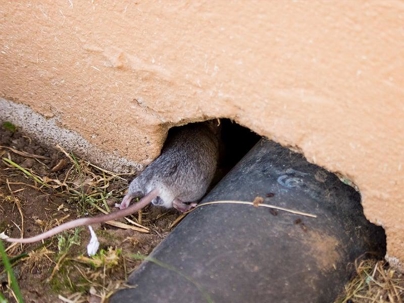
How Are Mice Getting Into My House? 8 Common Entry Points in Chester County Homes
You hear scratching in the walls at night. You discover mouse droppings in the garage. Maybe you've even spotted a mouse running across your kitchen floor.
The first question most homeowners ask is: How are mice getting into my house?
At Budget Exterminating Inc., we inspect homes throughout Chester County, Pennsylvania, for rodent activity. One thing we've learned over the years is that mice don't need a large opening to get inside.
In fact, a house mouse can squeeze through an opening approximately 1/4 inch wide — roughly the diameter of a pencil.
That means a home can appear completely sealed from the outside while still having several potential entry points.
Let's look at eight common areas homeowners should pay attention to.
1. Gaps Under Garage Doors
Garages are one of the first places we investigate when a homeowner reports mouse activity.
A garage door might look completely closed, but worn weatherstripping, damaged rubber seals, or uneven concrete can create openings along the bottom corners.
Once inside a garage, mice may find additional routes into the living space through utility openings, wall cavities, or connecting doors.
What to look for:
- Daylight visible beneath the garage door
- Damaged or missing rubber seals
- Mouse droppings along garage walls
- Evidence of gnawing near stored belongings
Keeping garage doors properly sealed is an important part of reducing rodent access.
2. Openings Around Pipes and Utility Lines
Plumbing, electrical wiring, air-conditioning lines, and other utilities frequently pass through exterior walls.
If the openings surrounding those penetrations aren't properly sealed, they can provide convenient access for mice.
These gaps are especially common around basement walls, utility rooms, and areas where equipment has been installed or replaced.
Mice can use these openings to enter wall voids and move into other sections of the house.
Homeowners should inspect visible utility penetrations and have damaged or improperly sealed openings addressed.
3. Foundation Cracks and Gaps
A home's foundation is another important area to inspect.
Over time, building materials can shift, deteriorate, or separate, creating openings along the foundation.
Even small gaps can become potential access points if they're large enough for a mouse to squeeze through.
We pay particular attention to foundation penetrations, cracks, and places where different construction materials meet.
These areas can be especially difficult for homeowners to identify without a thorough exterior inspection.
4. Gaps Around Exterior Doors
Your front door, back door, and basement entrance can all provide opportunities for mice to enter.
Damaged door sweeps, deteriorating weatherstripping, and gaps around door frames may create enough space for a mouse.
This is particularly important for doors leading into garages, basements, and storage areas.
A simple visual inspection can help identify obvious openings, but smaller gaps may require closer attention.
5. Crawl Space Openings and Vents
Crawl spaces can provide mice with sheltered access beneath a home.
Damaged vent covers, gaps around access doors, and unsealed utility penetrations may allow rodents to enter.
Once inside, mice may travel along structural components or through connected wall cavities.
Because crawl spaces are often out of sight, rodent activity can continue for some time before a homeowner notices a problem.
Proper inspection and maintenance of crawl space openings can help reduce these risks.
6. Gaps Where Siding Meets the Foundation
One area homeowners frequently overlook is the transition between siding and the foundation.
Depending on the home's construction, gaps or damaged materials at this junction may create concealed openings.
Mice naturally investigate protected spaces along exterior walls, especially where vegetation, landscaping, or debris provides cover.
An opening that looks insignificant from the outside may connect to a much larger concealed space.
This is why we don't limit our inspections to the most obvious holes around a house.
7. Rooflines, Soffits, and Attic Openings
Not all mice enter at ground level.
Some rodents can reach elevated portions of a structure using nearby vegetation, connected building materials, or other accessible surfaces.
Damaged soffits, roofline gaps, and openings around attic penetrations can provide access.
If homeowners hear scratching above their ceilings, especially at night, we may investigate attic spaces and accessible exterior openings.
It's important to remember that scratching in an attic doesn't automatically mean mice are responsible. Other animals can produce similar sounds, and identifying the pest is an important first step.
8. Attached Additions, Decks, and Structural Transitions
Homes aren't always built as one continuous structure.
Garages, additions, enclosed porches, decks, and other features may have been constructed at different times.
Where these structures connect, small gaps can develop or remain concealed behind building materials.
These areas can be difficult to inspect and may provide rodents with protected travel routes.
During a professional rodent inspection, it's important to consider how the entire structure connects — not just the area where mice were first noticed.
Why Do Mice Keep Getting Inside Even After You Seal a Hole?
This is a question we hear frequently.
A homeowner discovers an opening, seals it, and assumes the problem is solved.
Unfortunately, there may be additional entry points that haven't been identified.
It's also possible that mice have already established themselves inside the structure.
Sealing one opening doesn't necessarily eliminate an existing rodent population.
That's why effective rodent management should involve more than simply filling visible holes.
A comprehensive approach may include:
- Identifying areas of active rodent activity
- Inspecting potential exterior entry points
- Evaluating food sources and environmental conditions
- Using appropriate rodent-control equipment
- Monitoring activity and treatment progress
- Recommending exclusion repairs where needed
Important: Exclusion is an essential part of long-term rodent prevention, but the timing and method should account for any rodents already inside. Larger openings also need to be evaluated for other potential wildlife occupants before being sealed.
What Attracts Mice to Chester County Homes?
Even with small openings available, certain conditions can make a property more attractive to rodents.
Bird feeders, unsecured pet food, accessible garbage, cluttered garages, and stored materials can provide food or shelter.
As temperatures cool throughout southeastern Pennsylvania, sheltered indoor spaces may become particularly appealing.
Homeowners can help reduce rodent pressure by managing accessible food sources, maintaining exterior areas, and addressing structural openings.
However, sanitation and exclusion alone may not resolve an established infestation.
How Does Budget Exterminating Handle Mouse Problems?
At Budget Exterminating, our approach begins with understanding the activity rather than simply placing bait and hoping for the best.
We evaluate where rodents are active, identify potential travel areas, and consider conditions that may be contributing to the problem.
Our one-time rodent control service includes an initial service and a two-week follow-up visit to evaluate activity and replenish rodent-control materials as needed.
For homeowners who experience recurring mouse problems or want more comprehensive preventative pest protection, we also offer Home Shield Plus, which combines ongoing general pest and rodent services.
The appropriate option depends on the property, the extent of the activity, and the homeowner's goals.
How Can I Tell If Mice Are Already Inside My House?
Sometimes the first indication of an entry problem isn't an actual mouse sighting.
Homeowners may notice:
- Small droppings in garages, cabinets, or storage areas
- Scratching or movement inside walls and ceilings
- Gnaw marks on packaging or stored materials
- Shredded insulation or nesting material
- Unusual odors in enclosed spaces
- Activity around stored food or pet supplies
If you're noticing these warning signs, identifying the cause early can help prevent the problem from becoming more difficult to manage.
For more information about seasonal rodent activity, read our guide: Why Are Mice Coming Into Chester County Homes? A Guide to Fall Rodent Activity.
Professional Mouse and Rodent Control in Chester County, PA
Budget Exterminating Inc. has been serving Chester County and surrounding Pennsylvania communities since 1997.
As a local, third-generation, family-owned pest control company, we understand the rodent challenges homeowners face throughout the region.
We provide rodent-control services in Downingtown, West Chester, Exton, Coatesville, Malvern, Chester Springs, and surrounding communities.
Whether you've discovered mouse droppings in the basement, heard scratching in the attic, or spotted mice in your garage, our team can help evaluate the problem and recommend an appropriate treatment plan.
Finding Mice in Your Home?
Don't wait for a small rodent problem to become a larger infestation.
Contact Budget Exterminating Inc. today to learn more about our professional rodent-control services and ongoing Home Shield Plus protection.